We are living in an era of great change. Our usual business strategies are not working, and every leader across the globe knows it.
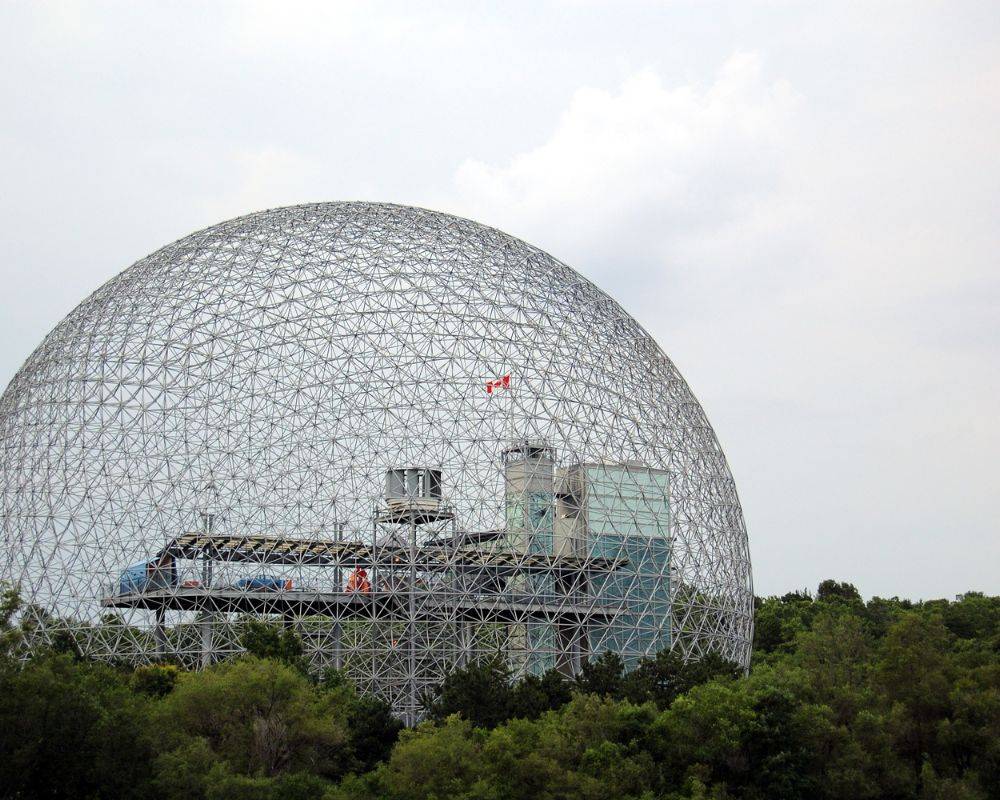
Buckminster Fuller sensed this moment five decades ago in 1976. He called it a convergence point, the place where old systems meet their limits and new ones become unavoidable. He named 2026 as the year we would all realise this truth. Not as a prediction but as a recognition of patterns that he saw if we did not change our trajectory.
My own convergence point was in 1992, when I discovered Buckminster Fuller’s work at a seminar in Perth, Australia. His writing named something I had been sensing and struggling to articulate. As an educated woman, I had long felt the friction of trying to belong inside systems that did not quite make sense to me. Fuller’s work gave language to that invisible unease. It helped me understand why the world felt misaligned, and why I kept questioning structures others considered as normal.
That moment gave me orientation, leading to a life in Academia, Human Rights, and eventually Small Business, drawn by the power of education through marketing and the change that could result for people and planet from tending to a supply chain.
Fuller was a philosopher and architect who tracked curves. In 1976, he noticed a threshold had been crossed by humanity.
In 1976, Fuller said that humanity had crossed an invisible line where we’d reached a level of technological and material capability where everyone, every single person, could live with dignity.
But there was no appetite for the idea at scale. There was too much money to be made, too much expansion to pursue, too much growth to sustain. There was no urgency, no education, and none of the systemic breakdowns we’re experiencing now that make the negative reality of the current economic system impossible to ignore.
What is ours to do?
By 2026, Fuller said that the consequences of extractive, competitive, poorly designed systems would become undeniable. Globally felt. Impossible to ignore.
But in a beautiful moment, he also saw that the tools to redesign those systems would also be fully available. One of those tools is regenerative business.
The beautiful tension of this moment is that money and growth still feel good to many, while simultaneously, more and more people can see that the old stories no longer work and are actively searching for solutions.
One of the wisdoms of Regenerative Business is Indigenous knowledge, which is helping many understand a new story. In truth it is an ancient story, but it’s new to non-indigenous people. Robin Wall Kimmerer (Potawatomi botanist) teaches us that “In the Indigenous worldview, a healthy landscape is understood to be whole and generous enough to be able to sustain its partners. It engages land not as property but as community.”
What This Means for Regenerative Business
If Fuller was right, then regenerative business is not a movement or a new idea; it’s a response to a 2026 tipping point.
Take Farming as a case in point. Industrialised farming practices have left the earth scorched, nature depleted, and farmers struggling to make ends meet, with soil quality just not up for the job. This was noticed 20 years ago, and if it wasn’t for action taken then, we would all be experiencing a food problem now. It’s proof that the system can adapt when they see crisis.
Business decisions rooted in regeneration are now inseparable from economic stability and well-being. You can find specific company examples in a previous article here.
We are living in the moment where scarcity reveals itself as a design failure rather than a natural law, where competition as a survival strategy becomes obsolete, where cooperation stops being aspirational and becomes pragmatic, and where systems designed for extraction begin to collapse under their own weight.
The businesses that understand this aren’t being virtuous, they’re being intelligent. They’re protecting their supply chains and their future viability. They are the businesses that will survive.
Large corporations have known for years that we’re in trouble. Not all are responding at the speed we need, but behind closed doors, they are responding. Nestlé is a company I’ve historically criticised, but they deserve a mention when working with people like Paul Hawken on regenerative business. This week, they topped the World Benchmarking Alliance’s first Ocean Benchmark, a ranking of how 125 of the world’s biggest companies contribute to sustainable management of oceans and coasts. Read Wildya‘s post for more on that.
They’re reading the curves that Fuller read, and they know that to exist in the present and future, this regenerative business path is a pathway to surviving and thriving.
Put simply, without nature, we cannot survive. We are nature.
What can you do as a business owner of any size?
Fuller loved the metaphor of the trim tab, a small rudder on a larger rudder that turns the whole ship with minimal force.
This is where all business owners come in. Whether you are a business of 1 or 100,000, you can find your trim tabs in your own enterprise.
Small, strategic, well-placed actions shift entire systems. You don’t need to change everything. You need to understand leverage and nodal points. A wisdom borrowed from biology and social science.
What small redesign in your own business could ripple outward? What outdated assumption could you release? What education and support do you need for the next steps?
After 1976, Fuller said, change no longer required mass force. It required insight, design intelligence, and strategic leverage.
This is the regenerative business path. In practice, this is circular economies, shared wealth, community support and soil regeneration.
The Responsibility That Arrived in 1976
Fuller believed 1976 was a threshold where poverty and ecological damage stopped being inevitable and became choices embedded in how we designed our systems.
From that moment, suffering pointed not to scarcity, but to outdated economic models, concentration of power, and failure of imagination.
We knew in 1972, when Donella Meadows published The Limits to Growth, what would happen if exponential economic and population growth met finite resources. We did not heed the warning then.
So what is our next step?
There are many threads worth exploring, but we don’t have the luxury of time for every business leader to take our years for study. Experts are waiting now to help you pursue a path of action. What’s becoming clear is that a multidisciplinary approach is required. I’ve woven these into what I call the 13 Wisdoms for a more detailed explanation, but here’s a place to begin.
- Self-Examination for the courage and will required.
- Regenerative Organic Farming as standard, not special.
- Willingness to completely redesign how value circulates
- Reconnection with Nature and Bioregionalism
- Circular Economy as Standard.
- Supply Chain tendering.
This is the work. Not adding a sustainability report. Not greenwashing the brand. But applying behavioural and change management principles to a new vision. Actually redesigning the business so it works for the whole, customers, team, suppliers, community, and our only planet, Earth.
Look to existing companies already doing this work. There are so many more than what I list but here is a taste of some pioneers. Vivobarefoot Natura Nestlé @ House of Hackney Local Futures Volans The Growth Experience® Australian Earth Laws Alliance Lawyers for Nature Sustainable Table Re-Action Collective United Repair Centre
There are signs that traditional institutions are responding. The Australian Institute of Company Directors and the University of Sydney Business School have collaborated to produce Australia’s first study examining the rise of nature as a boardroom priority. Companies like KPMG in Australia appointed a chief purpose officer a few years ago. So, system change is slow but happening.
As a consumer, you may find this hard to believe, with plastic and non-recyclable packaging still dominating our product choices. Yet we’re seeing shifts: 2025 brought new Waste Laws compelling companies to take responsibility for their waste, and in 2022, Faith In Nature became the first UK company appointed nature to the board to influence their supply chain decisions. It’s these structural transformations that create the systemic change required and inspire us all that it’s possible. So what’s your Trim Tab?
The Choice we all face.
Fuller believed humanity would reach a crossroads in 2026.
As a business owner, the question is: are you feeling it? And what is now yours to do?
For some, the first step is simply embracing the learning and seeking support. For others, it’s time to dive into systemic change within their organisation. Wherever you are on this journey, compassion for yourself and others matters, because this is BIG!
Either we reorganise around cooperation and care, or we experience an accelerating collapse that forces reorganisation anyway.
It’s time to make that choice. The urgency is upon us in the form of weather disruption, supply chain breakdown, an anxiety epidemic, and more.
Fuller spoke often about Spaceship Earth and asked a simple question.
Are we passengers fighting over seats, or crew members learning to operate the ship together?
Regenerative business is crew behaviour.
It’s understanding that your success and my success are not separate. That value doesn’t extract; it circulates. That intelligence means aligning with how life actually organises, not forcing life to comply with outdated models.
Why This Matters Now
The threshold is here. You’re standing in it. The question isn’t whether the old systems will hold. The question is: what are you designing instead?
Fuller believed humanity would choose life. I know I am. Not because of any virtuous or spiritual calling, but because reality eventually makes regeneration the most intelligent move available for every business, organisation and school on the planet.
I believe the businesses that understand this now, the ones willing to redesign, to circulate value, to act as trim tabs, will not only survive what’s coming, they’ll shape what arrives next.
𝐌𝐲 𝐦𝐢𝐬𝐬𝐢𝐨𝐧 𝐢𝐬 𝐬𝐢𝐦𝐩𝐥𝐞: 𝐒𝐭𝐞𝐰𝐚𝐫𝐝 𝐫𝐞𝐠𝐞𝐧𝐞𝐫𝐚𝐭𝐢𝐯𝐞 𝐛𝐮𝐬𝐢𝐧𝐞𝐬𝐬 𝐚𝐬 𝐭𝐡𝐞 𝐧𝐨𝐫𝐦.
Through Private mentoring, Nature’s Boardroom and The Growth Experience® Experience, I support leaders running their own companies to learn and experience regeneration so they can move from overwhelm to clarity, from over-functioning to sustainable high performance and from linear problem solving to living systems intelligence.
I also steward nature into decision-making within companies for new governance as a Wayfinder and a voice for nature in business.
At my core, I am an educator who loves to mentor, teach, share and facilitate learning in ways that are regenerative, relational and rooted in nature. Not the old expert model, but learning and experiences that help people grow from the inside out.
For 30 years, I’ve run four companies with regenerative instincts and purpose. This has given me the business acumen to understand the real pressures leaders face and the regenerative frameworks to help them work in healthier, more meaningful ways. I bridge practical business design with new ways of holding purpose, impact and responsibility.
You can subscribe to Jannine’s inspiring short newsletters, event invitations, and business mentoring tips here. You can read more articles written by Jannine on Substack, or LinkedIn.