Every now and again, someone steps out of the ordinary pattern of leadership and does something that reframes what is possible. Not for glory or scale but because something in the world is calling for a new story.
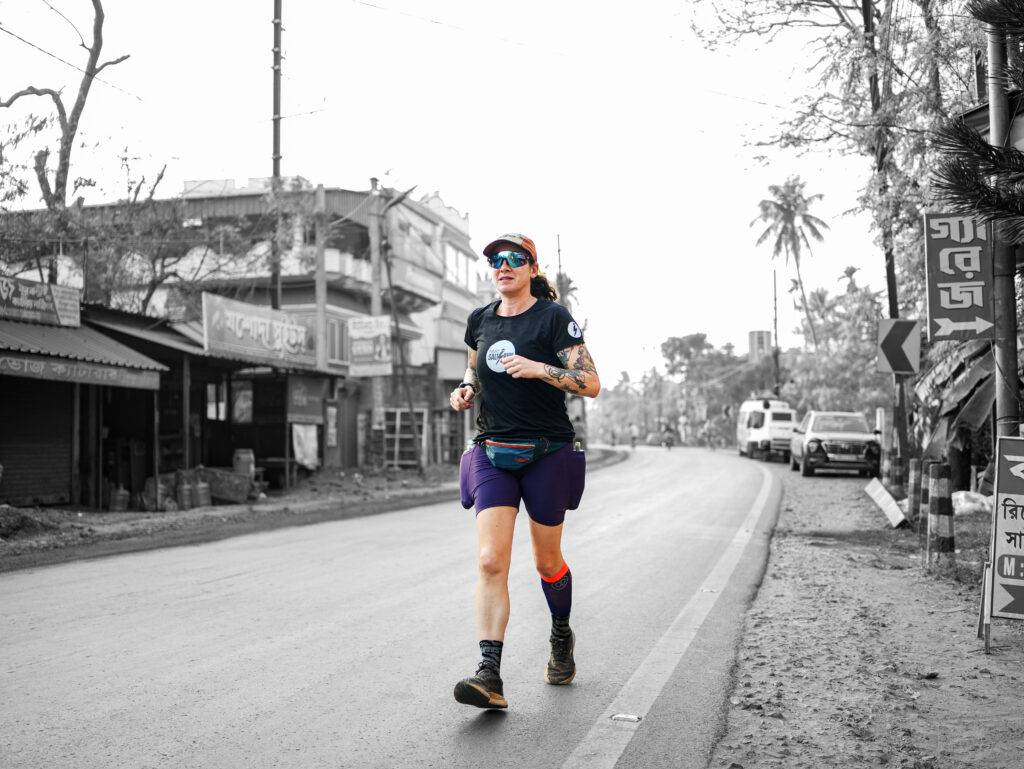
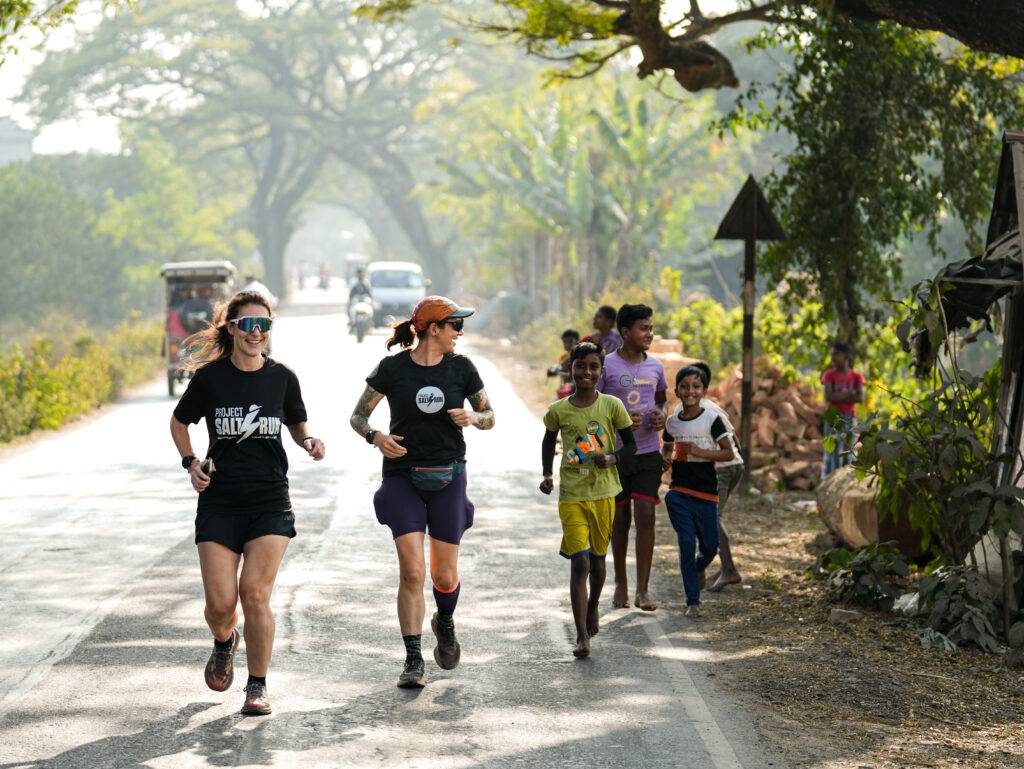
Hannah 🌿 Cox is that leader this week. She just ran 100 Marathons in 100 days along the Indian section of the Old Inland Customs Line, a forgotten colonial route once used to control people, resources, and wealth, finishing this week on Monday, 2nd February.
Project Salt Run is both an extraordinary physical feat and a powerful narrative intervention, bringing attention to a chapter of history that continues to shape our economic systems today.
Dutch East India Company
In 1602, the Dutch East India Company built vast wealth through monopolies, forced trade, and the violent extraction of resources across Asia, before being dissolved in 1799. One of its tools of control was the salt tax, which turned a basic human necessity into a source of profit and oppression, placing a disproportionate burden on local populations.
These systems did not disappear. They were renamed, reorganised, and normalised.
One Million for the climate
Like many bold challenges, Hannah Cox began with a clear goal: to raise £1 million for four charities working to make the world more just and life-giving. But Project Salt Run became far more than a fundraising effort.
It deepened connection across communities, brought hidden histories into public awareness, and demonstrated what future-fit courage looks like when it is lived, step by step, in the real world.
Project Salt Run brings into focus how extractive and oppressive business practices began, and how they have continued, rebranded, for centuries.
As founder of the Better Business Network, Hannah challenges business owners to ask whether they dare to face past harm and consciously design for a different future that she calls, Better Business.
Project Salt Run s a living expression of that challenge and has brought into focus how extractive and oppressive business tactics began and how they have continued, rebranded, for centuries.
And she did not do it alone! The team has more people than I can possibly know and much sponsorship, including a few humble contributions from this writer. But I can acknowledge Natalie Smith Joel Chevaillier (FRGS) Alex Fowler, who fed, bandaged, massaged, nurtured and transported Hannah in incredibly challenging conditions. hannah ballard who joined her on Day 91 and countless donations from amazing locals whose names i wish I knew! Moxy the bus inspired me so I donated to it’s wellbeing. 🌍 Jamie Bettles, Matthew Usherwood and Molly Gould and Graham Hansen held the fort in the UK, looking after members. Hannah Galvanised a team to step up!
Leadership for What Comes Next
Leadership for what comes next is shaped less by position and more by presence. It asks leaders to move beyond optimisation and into conscious design for a changing world. Here are the seven leadership inspirations that Hannah 🌿 Cox has taught us all in the last 100 days. Would you add any to this list?
1. Leaders run toward the fracture lines, not away from them
Big leaders choose work that is not convenient. They go exactly where the story is uncomfortable.
The Salt Run moves across states marked by historical inequity and contemporary complexity. It brings Hannah face-to-face with the social, political, and ecological edges of a nation still shaped by colonial design and it required physical and mental tenacity on a scale that most of us would run away from, not toward.
Leaders like Hannah do not tidy history. They illuminate it. They understand that regeneration requires truth-telling, not glossing over and that the new story we are all designing together is empowering, powerful and just makes sense for the future.
2. Leaders risk visibility because the story matters more than their comfort
The most powerful risk is not physical. It is the risk of being seen doing something that others may not yet understand.
A 100-day run, through difficult terrain, in extreme heat, across unfamiliar regions, is an act of public vulnerability. It says: This matters enough that I will become the story, so the bigger story can be told.
Real leaders let their actions carry meaning. They know that embodiment builds trust faster than strategy decks ever will.
3. Leaders widen the frame
Colonial salt taxation was more than an economic instrument in India. It shaped trade, migration, power and resistance. It shaped psychology and place for Indians, Pakistanis and British, Europe, the entire world order and economic system.
By revisiting the Inland Customs Line, the Salt Run reframes this history as living rather than archived. It asks us to consider how old infrastructures of extraction manifest in modern systems, such as supply chains, governance, development, land use, and cultural identity.
Leaders who do big things move fluidly between past, present and future. They understand that nothing changes until the narrative changes.
4. Leaders let landscape be their teacher
This is where regenerative leadership reaches beyond performance.
As Hannah runs, she is learning through her feet, her lungs, her fatigue, and her intimacy with place. She is reading the terrain in ways no satellite map or policy report could reveal. She is tracing her father’s ancestry and visiting his childhood home. Landscape shaped business not just in the 17th century but for all it became.
Leaders who walk or run long distances through landscapes learn a different kind of intelligence: kinship, humility, scale, and interdependence. They learn that transformation is not intellectual. It is embodied.
5. Leaders choose meaningful difficulty
Big leaders do not chase challenges for the sake of ego. They choose the challenge that makes the world more whole and to be in service to others as inspiration and regeneration.
A run like this is a chosen difficulty. It is an offering. An act of devotion to the idea that remembering is a form of justice. It is also in service to recognised charities. 1% for the Planet Big Change Frank Water ClientEarth
It signals that regeneration is not soft work. It is demanding, exposing, sometimes dangerous work that asks everything of us.
6. Leaders leave something behind that continues without them
The Salt Run is temporary in form but long-lasting in consequence.
It sparks conversations about colonial boundaries. It prompts new curiosity about local histories. It reveals unseen communities and forgotten stories. And it lays a trail of meaning for others to follow.
This is what genuine leadership does: it creates momentum that survives the leader’s presence.
7. Leaders embody the future story
Our world needs leaders who move beyond sustainability narratives and step into acts of cultural repair and narrative regeneration. In Hannah’s run, we see the characteristics of the leaders we need now:
- Courage to cross thresholds
- Willingness to let place shape the pace
- Capacity to hold history and possibility at the same time
- Devotion to something larger than personal success
This is leadership that is not performative but participatory. Not extractive but reciprocal. Not symbolic but systemic. In short, this is powerful, memorable and engaging. Those of us in the WhatsApp group were all running with her most days, urging her on, reminding her she was not alone.
The Salt Run is a manifesto for the next era of leadership
Hannah’s 100-day journey is more than a project. It is a quiet manifesto for a new kind of leader. She may have finished the run on 2/226 but it’s a threshold, not an ending, for what we all need to wake up to and embody from her inspiration.
Hannah has reminded us all that the boundaries we inherit are not the boundaries we must keep.
Leaders who do big things do not wait for conditions to be perfect. They begin running long before the world catches up.
𝐌𝐲 𝐦𝐢𝐬𝐬𝐢𝐨𝐧 𝐢𝐬 𝐬𝐢𝐦𝐩𝐥𝐞: 𝐒𝐭𝐞𝐰𝐚𝐫𝐝 𝐫𝐞𝐠𝐞𝐧𝐞𝐫𝐚𝐭𝐢𝐯𝐞 𝐛𝐮𝐬𝐢𝐧𝐞𝐬𝐬 𝐚𝐬 𝐭𝐡𝐞 𝐧𝐨𝐫𝐦.
Through Private mentoring, Nature’s Boardroom and The Growth Experience® Experience, I support leaders running their own companies to learn and experience regeneration so they can move from overwhelm to clarity, from over-functioning to sustainable high performance and from linear problem solving to living systems intelligence.
I also steward nature into decision-making within companies for new governance as a Wayfinder and a voice for nature in business.
At my core, I am an educator who loves to mentor, teach, share and facilitate learning in ways that are regenerative, relational and rooted in nature. Not the old expert model, but learning and experiences that help people grow from the inside out.
For 30 years, I’ve run four companies with regenerative instincts and purpose. This has given me the business acumen to understand the real pressures leaders face and the regenerative frameworks to help them work in healthier, more meaningful ways. I bridge practical business design with new ways of holding purpose, impact and responsibility.
You can subscribe to Jannine’s inspiring short newsletters, event invitations, and business mentoring tips here. You can read more articles written by Jannine on Substack, or LinkedIn.