Sometime late in 2025, I walked among ancient Grass Trees in Australia and felt a quiet stirring.
I knew something was asking for my attention, but I did not know this was my prompt to expand my work on Nature governance, exploring what it really means to bring Nature into the places where decisions are made, not simply as something to protect, but as a participant in how we shape the future.
That quiet stirring among the Grass Trees has grown into a much bigger inquiry: what changes when Nature has a meaningful place in governance?
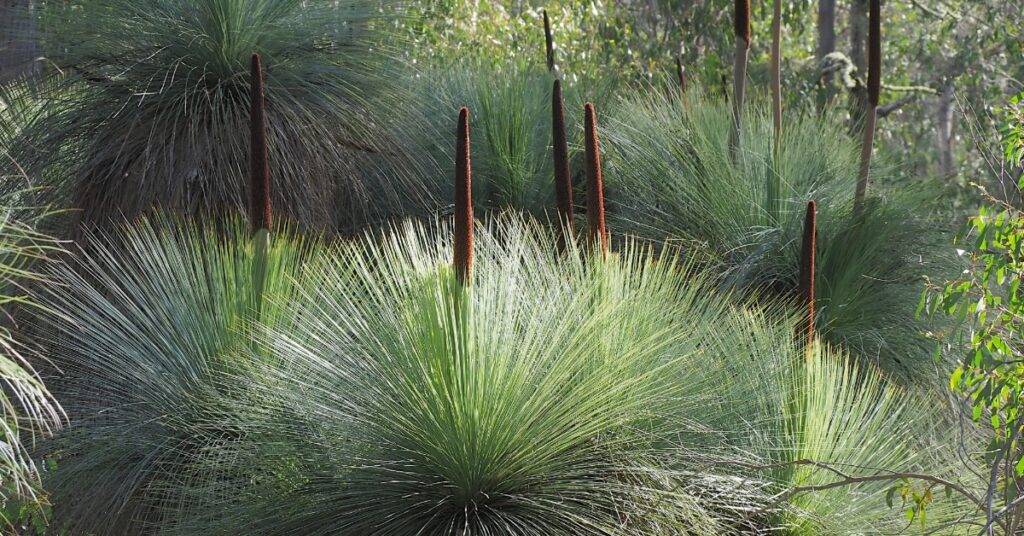
I had loved Grass Trees all my life, but I had never stood anywhere like this. Hundreds of them, gathered together, some barely five years old, some closer to eight hundred. I kept reaching for the word forest, though that was never quite right. It felt older than a forest. It felt like standing inside deep time.
My friend Michael had brought me there. For two decades he has worked alongside the bees on this land, making Australia’s Manuka honey, and I think he knew what the place would do to me before I did. He didn’t explain it. He let me arrive in my own time, and then he let the silence do the rest.
What stirred in me that day wasn’t a new idea. It was something that had been quietly growing for years, finally finding its shape.
For almost a decade my work in regenerative business had been moving closer and closer to a single question: what does it mean to bring the living world into the way we lead, organise and decide? Since 2021 I had been taking leaders out of their meeting rooms and into places like this immersions I called Nature’s Boardroom, so that we might listen differently, question the assumptions of business as usual, and let Nature back into the conversation. Bringing people into Nature wasn’t new to me.
But standing among the Grass Trees, the question turned.
I had spent so long thinking about how we might speak for Nature. Now I found myself wondering what it would take to listen, to relate, to speak with Nature instead. In the heat of this polycrisis, protecting the living world no longer felt like enough. We needed to come back into relationship with it. And that small shift from for to with changed everything downstream of it.
The Grass Trees themselves seemed to be teaching me how.
They are ancient and extraordinarily resilient. They have lived through immense change, and they have made an unlikely peace with fire the very thing that looks like destruction is what stirs their seeds into life. Fire renews their flowering, sending tall, spear-like blooms toward the sky, offering food and habitat to everything that gathers around them. Endurance through drought, through fire, through regeneration. Patience measured in centuries.
And they are uniquely Australian. That mattered more than I understood at first.
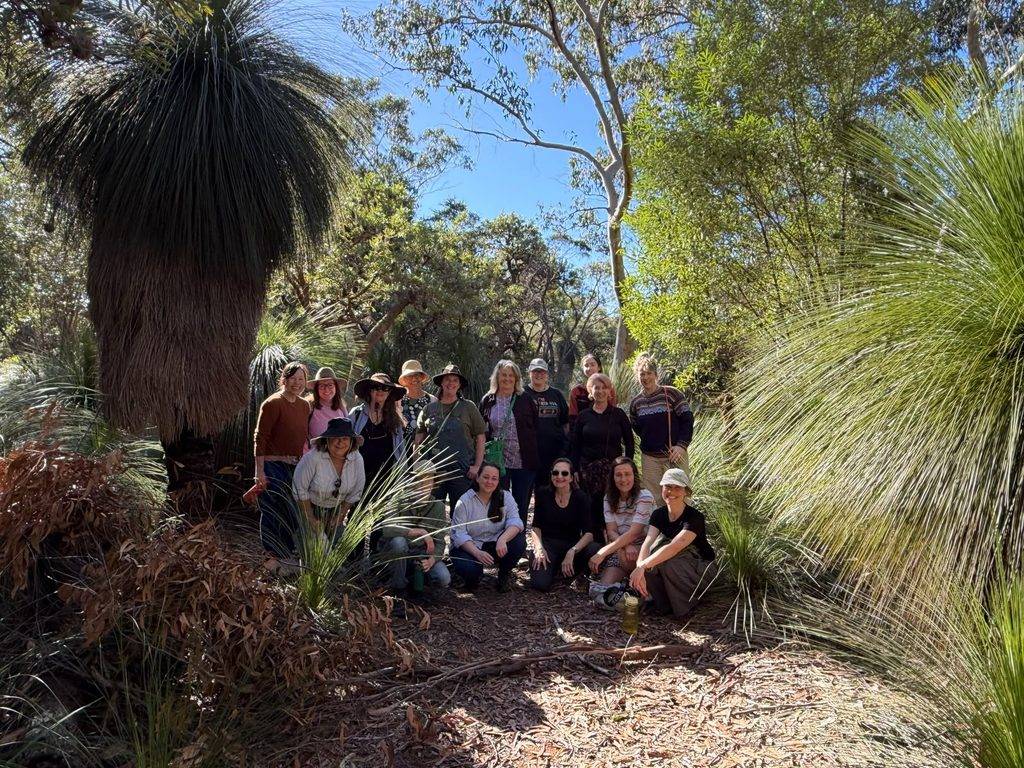
Because the next question that rose in me was this: I have lived in the UK since 2019 so why did I feel, so strongly, that this work needed to happen differently in Australia?
The answer was already in the ground beneath my feet. First Nations peoples have been in deep relationship with Country for at least 65,000 years, holding relational ways of being that understand us all as kin land, waters, plants, animals, people, ancestors, and the generations not yet born. We do not need to invent a new relationship with Nature. We need to listen, learn, and perhaps remember something our dominant culture has forgotten. Not to extract that wisdom, or translate it into another Western framework, but to sit with it respectfully. If we are going to explore what it means to bring Nature into how we govern and decide, then Indigenous wisdom has to be woven through the whole of it.
Which led me, quite naturally, to a harder truth about my own role.
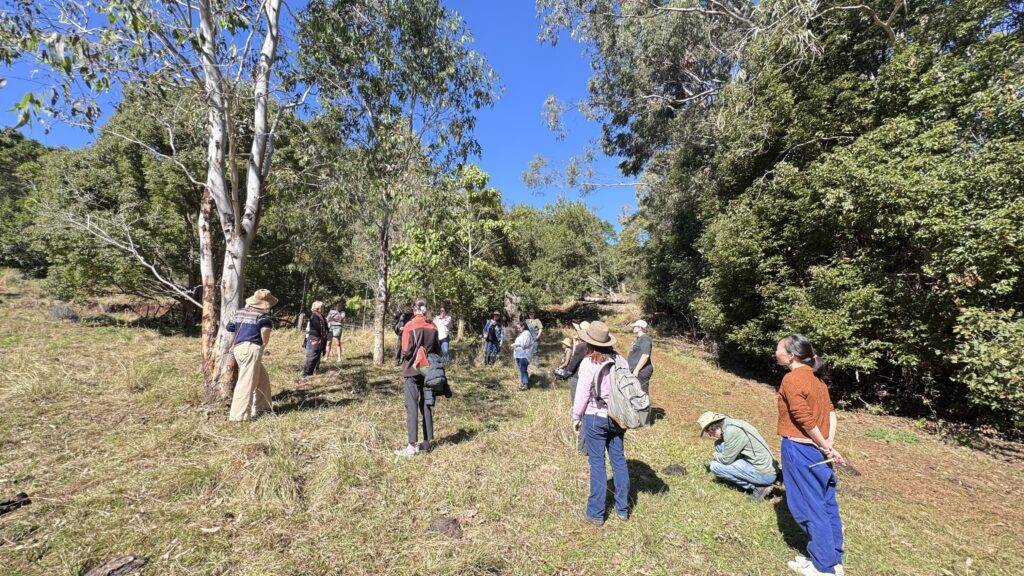
As a sole trader, I could so easily have built a programme around my own ideas and tried to own it. But everything the Grass Trees were showing me pointed the other way. This work needed more than one voice. It needed different knowledge systems, disciplines and lived experiences. It needed an ecosystem of relationships. My job was not to possess the seed but to become its wayfinder, the one who gathers the relationships around it and helps it find its way into the world.
So two partnerships emerged from that day.
The first was with Nature itself: noticing what it was asking of me, and responding. The second would be human. And when I asked who might walk beside me, one name arrived before the others.
In early 2026 I approached Michelle Maloney at the Australian Earth Laws Alliance. She said yes almost before I had finished asking. Her collaborations with Dr Mary Graham, with Tyson Yunkaporta, with John Seed and so many others carried exactly the deeply relational approach this work needed. Since 2012, AELA has been quietly turning governance from human-centred to Earth-centred, across law, economics, education and community. They brought the Earth-jurisprudence, the legal pathways, and the relationships to ground all of this in an Australian context.
Looking back, I can see every thread arriving at once: my years in regenerative business, my own deepening relationship with Nature, my exploration of Earth-centred law as a Dandelion Fellow, my time held by the Kincentric Leadership community and a transformative season at Findhorn and something first awakened in me at nineteen, in my earliest encounters with First Nations wisdom. All of it had been preparing me to hear what the Grass Trees had to say.
And so the seed crossed a threshold. From an idea, to a partnership, to a Fellowship.
We are now halfway through our first year, learning alongside an extraordinary group of people who are exploring what Nature-inclusive governance might mean within their own organisations and places. And already, people are beginning to ask about the next Fellowship.
It feels as though the seed is finding new ground.
If you feel curious about joining us next year, you can register your interest here and we will keep you close as the next chapter begins to take shape.
This year, twenty-two of us have been walking this path together since June leaders from business, government, academia, community and regenerative practice, all asking what it might really mean to bring Nature into how we govern and decide. Some of them write about the journey as they go; you can follow along with them. The work is still emerging, and we will keep welcoming new voices as it grows.
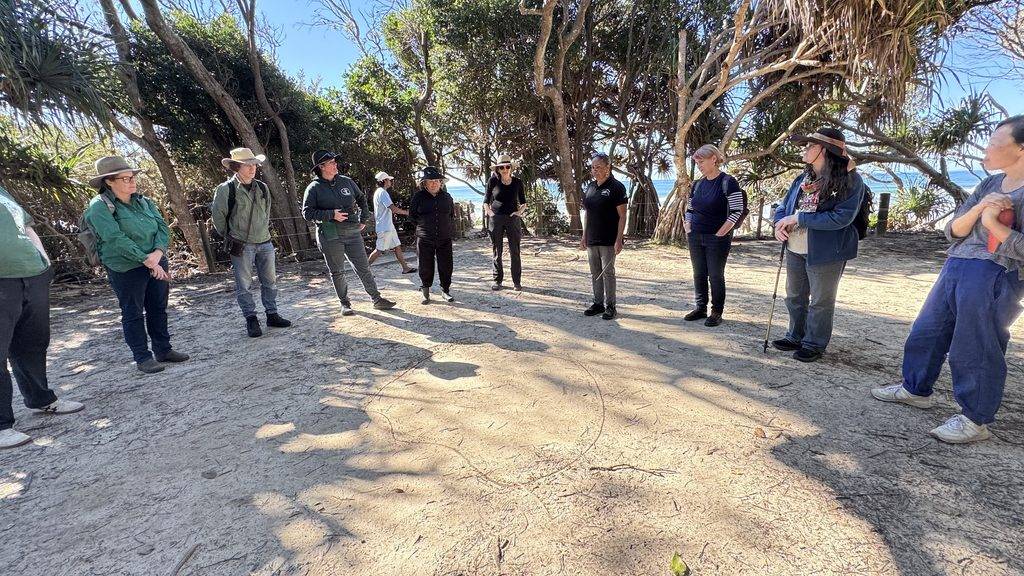
I owe deep thanks to those who have made this first adventure so richly inclusive:
Delta Kay – Arakwal custodian, who took us all on an immersive experience with Country in July this year.
Dr Mary Graham – Adjunct Professor, University of Queensland
Char Love – Voice for Nature for House of Hackney.
John Seed -Deep Ecology.
Bronte Ansell – Lawyer for Nature and First Nature Voice for Faith in Nature
Michael Howes – Australia’s Manuka
Dr Dominique Hess – Regen Melbourne Voice for Nature
Dr Michelle Maloney and Sarah Bashforth from AELA
Thank You!
The seed was stirred among the Grass Trees that day. Now twenty-two of us are listening for what wants to grow next and if something in you is stirring too, you’re warmly invited to join us in 2027. You can follow The GrassTree Fellowship with me on Substack or on Linkedin here.
If you would like to join us in 2027 in The GrassTree Fellowship you can register your interest here.
Grass Trees | Australia | First Nations | Recognition and Emergence | Partnership with Nature | AELA | Fellowship.
My mission is simple: Support founders and leaders to reimagine and redesign business in service to life, where living systems thinking is the norm and Nature has a meaningful place in how we lead, govern and make decisions in relationships.
Increasingly, a strong thread of my work is Nature-inclusive governance, exploring how we move Nature from something a business considers or impacts, to meaningfully influencing how decisions are made in organisations. From bringing Nature into decision-making and governance structures to creating a formal seat for Nature at the Board. As a result, I created The Grass Tree Fellowship Program as a structured learning journey in Nature-inclusive governance, helping to grow the knowledge, research, practice and leadership needed for this emerging field.
I love to mentor, teach and facilitate learning in ways that are regenerative, relational and rooted in Nature. Not through the old expert model of having all the answers, but by creating the conditions for people and organisations to see differently, ask better questions and discover what wants to emerge.
I do this through Private Business Mentoring and Coaching, Nature’s Boardroom (Nature Immersions) The Grass Tree Fellowship Program and The Growth Experience®,
For more than 30 years, I have built and run four purpose-led companies. That experience gives me an understanding of the very real pressures of business, alongside the regenerative thinking and frameworks needed to imagine something different.
You can subscribe to Jannine’s inspiring short newsletters, event invitations, and business mentoring tips here. You can read more articles written by Jannine on Substack, or LinkedIn.